
Complete Guide to AWS DevOps Tools: CodePipeline, CloudFormation, ECS, EKS & More
2/3/2026
In today's fast-moving tech world, speed alone isn't enough. Reliability, scalability, and automation are just as critical. This is exactly where AWS DevOps tools step in.
Built by Amazon Web Services, AWS DevOps tools help teams build, test, deploy, monitor, and secure applications faster, without the chaos of manual processes.
Whether you're a student, a fresher, or a working professional planning to move into cloud and DevOps, this guide will give you a clear, industry-ready understanding of AWS DevOps tools.
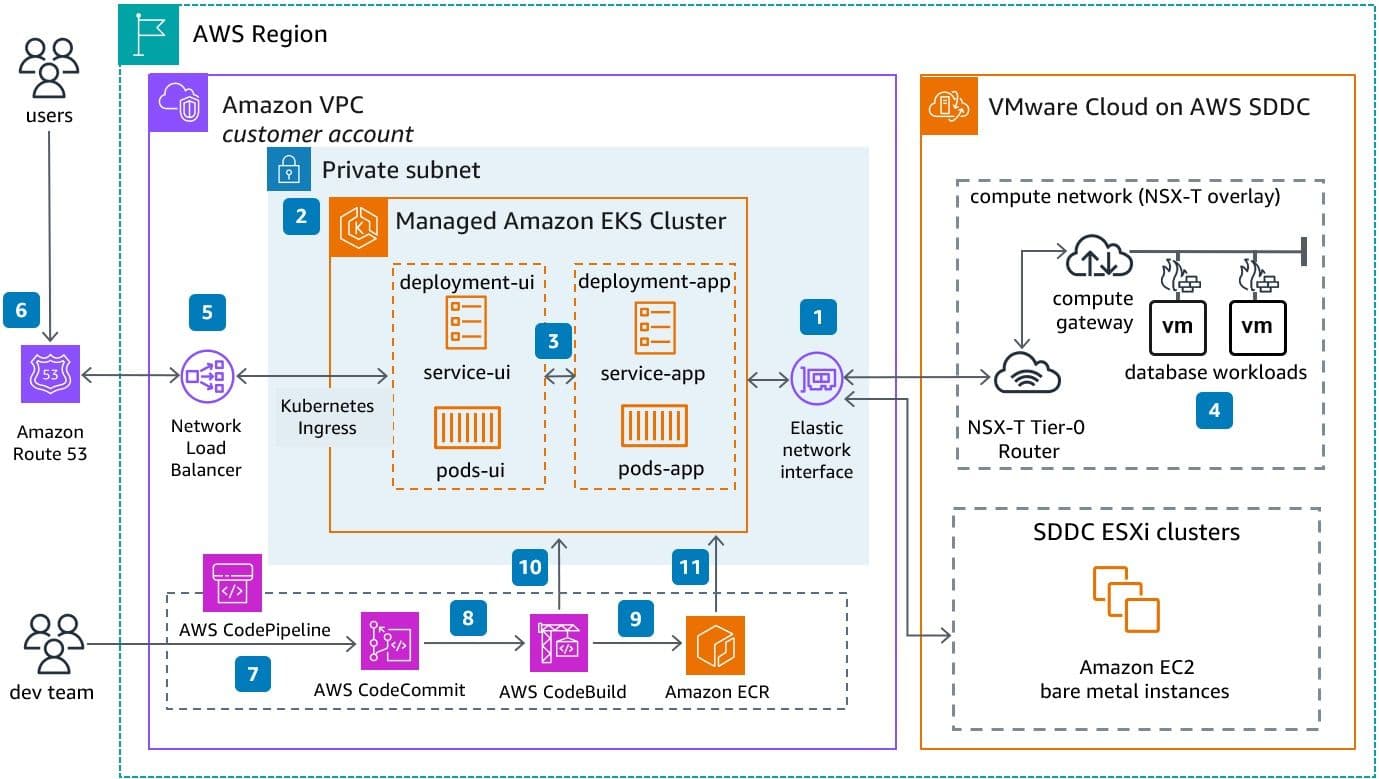
What Are AWS DevOps Tools?
AWS DevOps tools are a collection of cloud services designed to support the DevOps culture, where development and operations teams work together using automation.
Instead of manually:
- Setting up servers
- Deploying code
- Scaling infrastructure
- Monitoring performance
AWS DevOps tools automate these tasks, helping teams ship features faster with fewer errors.
In simple terms: AWS DevOps tools = automation + speed + stability.
Why Are AWS DevOps Tools Used?
Modern applications demand frequent updates. Manual workflows slow teams down and increase the risk of failure.
AWS DevOps tools help teams:
- Release software faster
- Reduce human errors
- Scale applications automatically
- Improve security and reliability
- Optimize infrastructure costs
That's why startups, enterprises, and product companies worldwide rely on AWS-based DevOps pipelines.
What Do AWS DevOps Tools Handle?
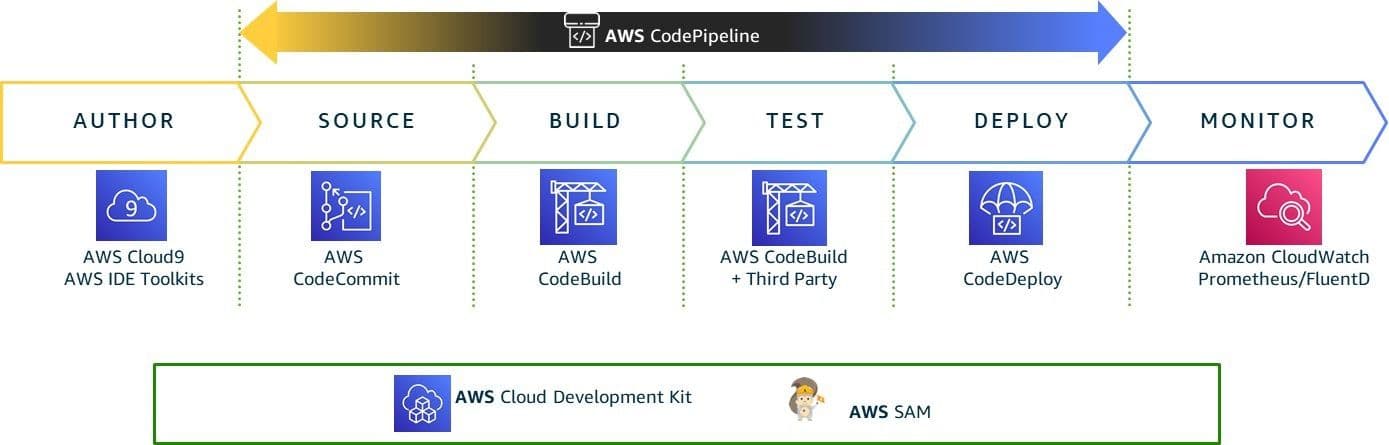
AWS DevOps tools cover the entire application lifecycle:
- CI/CD automation
- Infrastructure as Code (IaC)
- Application deployment & management
- Compute & containers
- Monitoring, logging & tracing
- Security, identity & compliance
Let's break each part down in a practical way.
CI/CD in Simple Words
CI/CD stands for Continuous Integration and Continuous Deployment.
It means:
- Code is automatically built
- Tested on every change
- Deployed safely to production
No manual uploads. No risky last-minute fixes.
AWS CI/CD Tools
- AWS CodeCommit – Secure source control for your code
- AWS CodeBuild – Automated build and testing
- AWS CodeDeploy – Reliable application deployments
- AWS CodePipeline – End-to-end CI/CD workflow orchestration
Together, these tools form a fully automated DevOps pipeline.
Infrastructure as Code (IaC)
Infrastructure as Code means creating servers, networks, and resources using code instead of manual setup.
Benefits:
- Repeatable infrastructure
- Version control
- Faster recovery
- Zero configuration drift
AWS IaC Tools
- AWS CloudFormation – Template-based infrastructure provisioning
- AWS CDK – Infrastructure using programming languages like Python & TypeScript
IaC is a core DevOps skill and widely demanded in the industry.
Application Deployment & Management
Deploying applications shouldn't be painful. AWS provides managed services to simplify this.
- AWS Elastic Beanstalk – Deploy apps without managing servers
- AWS Systems Manager – Automation, patching, and operational control
These tools are ideal for teams that want speed without operational complexity.
Compute & Auto Scaling
Applications need computing power—but not always the same amount.
Core Compute Services
- Amazon EC2 – Scalable virtual machines
- AWS Auto Scaling – Automatically adjusts resources based on demand
This ensures high availability and cost efficiency.
Containers & Orchestration
Containers are the backbone of modern DevOps.
AWS Container Tools
- Amazon ECR – Store container images
- Amazon ECS – Native container orchestration
- Amazon EKS – Managed Kubernetes
- AWS Fargate – Run containers without managing servers
Containerization improves portability, scalability, and deployment speed.
Storage, Networking & Load Balancing
- Amazon S3 – Store artifacts, logs, and backups
- Elastic Load Balancing – Distribute traffic and ensure high availability
These services keep applications resilient and performance-optimized.
Monitoring, Logging & Tracing
Visibility is critical in DevOps.
- Amazon CloudWatch – Metrics, logs, alarms
- AWS X-Ray – Trace performance bottlenecks
Monitoring helps teams detect issues before users do.
Security, Identity & Compliance
Security is built into AWS DevOps workflows.
- AWS IAM – Access control
- AWS KMS – Encryption and key management
- AWS CloudTrail – Track API activity
- AWS Config – Resource compliance monitoring
These tools ensure secure, auditable, and compliant systems.
Why Learn AWS DevOps Today?
AWS DevOps skills are among the highest-paying and most in-demand cloud skills globally.
Companies want engineers who can:
- Automate deployments
- Scale systems reliably
- Reduce downtime
- Improve developer productivity
Learning AWS DevOps opens doors to roles like:
- DevOps Engineer
- Cloud Engineer
- Site Reliability Engineer (SRE)
Final Thoughts
AWS DevOps tools transform how applications are built and delivered. From CI/CD pipelines to container orchestration and security, AWS provides everything needed to build production-ready systems at scale.
If you master these tools, you're not just learning technology—you're learning how modern companies operate.
Want to Learn AWS DevOps the Right Way?
Simple, practical, and industry-ready.
Follow Eduwise Solutions for more easy-to-understand DevOps and cloud content.